
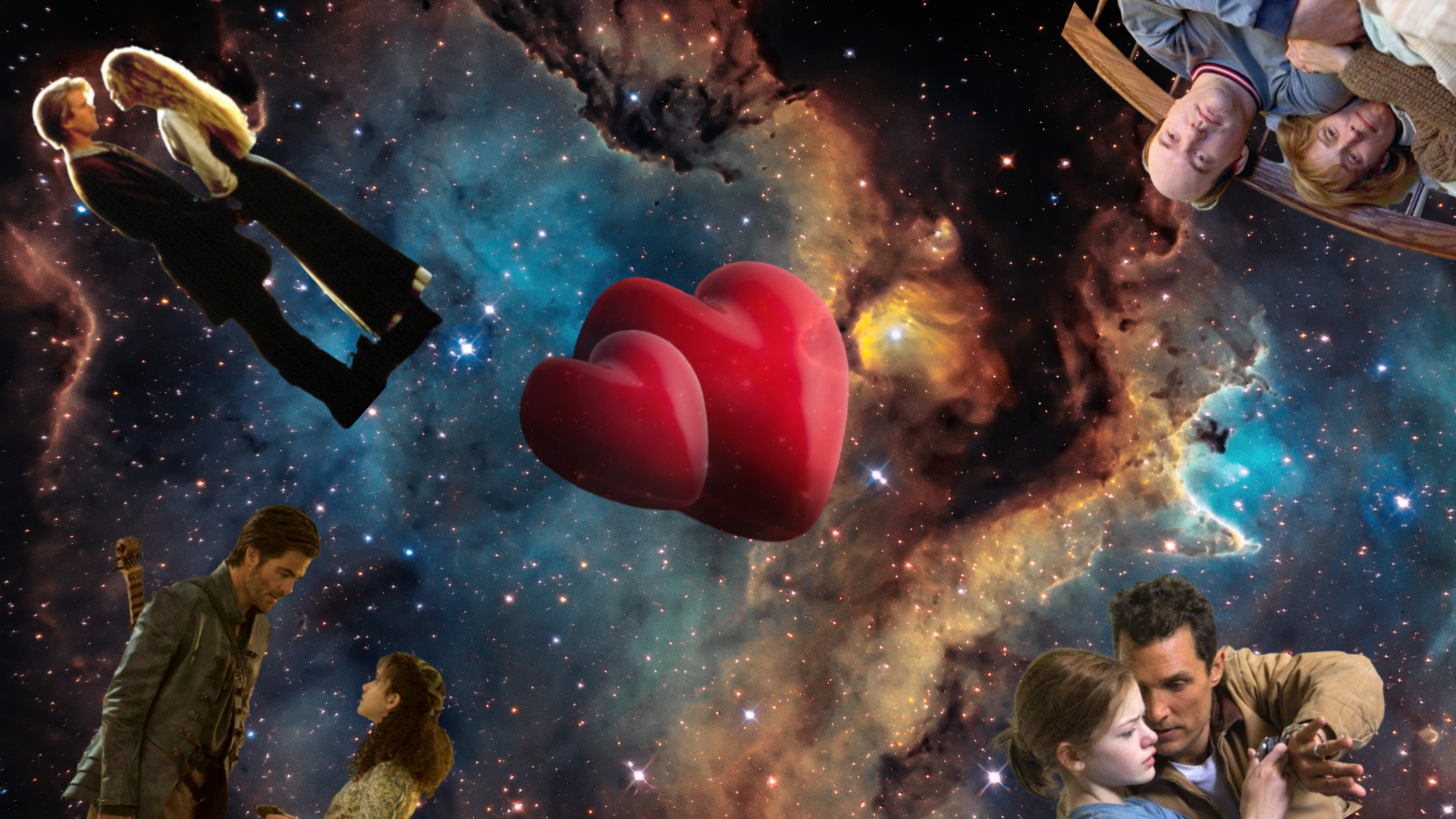
If there’s a central message in Christopher Nolan’s 2014 masterpiece “Interstellar,” it’s that love is, in the most literal sense, universal.
Nolan’s filmography is the perfect example of this. No matter the genre he’s exploring, from “Inception” to “The Dark Knight” to “Oppenheimer,” love is a driving force in the lives of the characters.
For a filmmaker whose movies often embrace maximalism, sometimes to their detriment, Nolan’s exploration of human love is one of the most consistent themes in his catalog, and for good reason.
Very little captivates us like a love story.
While Valentine’s Day is certainly the time of year when rom-coms get to shine, you can find a brilliant romance story in almost every genre. “The Princess Bride” subverts the fantasy genre in so many ways, but the central tenet of the quest for love is ever-present. Meanwhile, “Sinners” weaves multiple romances into the backdrop of a vampire-horror period drama.
Often, romance is a grounding force for the characters, and them being pulled away from it creates tension. “Fargo” follows a small-town police officer whose relationship with her husband serves as an escape from the spiraling situation around her. “Dungeons & Dragons: Honor Among Thieves” leverages the lead character’s lost love as a powerful tool for sacrifice, pulling off one of the only satisfying fake-out deaths I’ve ever seen.
But love stories are far from limited to film.
Take a look at the top songs on the Billboard Hot 100 at any given time. You’ll almost always find love songs taking up most of the spots. As of this article’s publication, three of the top four songs are Olivia Dean’s “Man I Need,” Alex Warren’s “Ordinary” and Bruno Mars’ “I Just Might.”
See the pattern?
Or how about television? Two of the most popular shows in the world right now are “Bridgerton” and “Heated Rivalry,” both of which are romance-centered, and both of which began as novels. There’s no better example of the universality of love stories than adaptation across media.
There’s a good reason for our consistent appetite for these stories. They combine two of the things that most define us as humans: art and love.
Love is so often at the center of art because it’s relatable. Whether platonic, romantic or familial, love is truly a universal feeling. When it’s expressed in a way you’ve never seen before, it becomes compelling because it’s a new spin on something everyone’s felt before.
A love story makes genre, medium, character, author and even storytelling itself irrelevant. It appeals to an emotion that is almost entirely involuntary, but also entirely individual. Everyone will relate to a love story in a different way, but the important thing is that everyone can relate to it.
Just like in “Interstellar,” love doesn’t adhere to the boundaries of space and time. It’s human, just like art, and art about love knows no boundaries either.