
Women’s History Month is a time of recognition and celebration for everything women throughout history have accomplished and continue to accomplish.
However, when it comes to politics and social movements, women are often not included in the conversation despite playing pivotal roles.
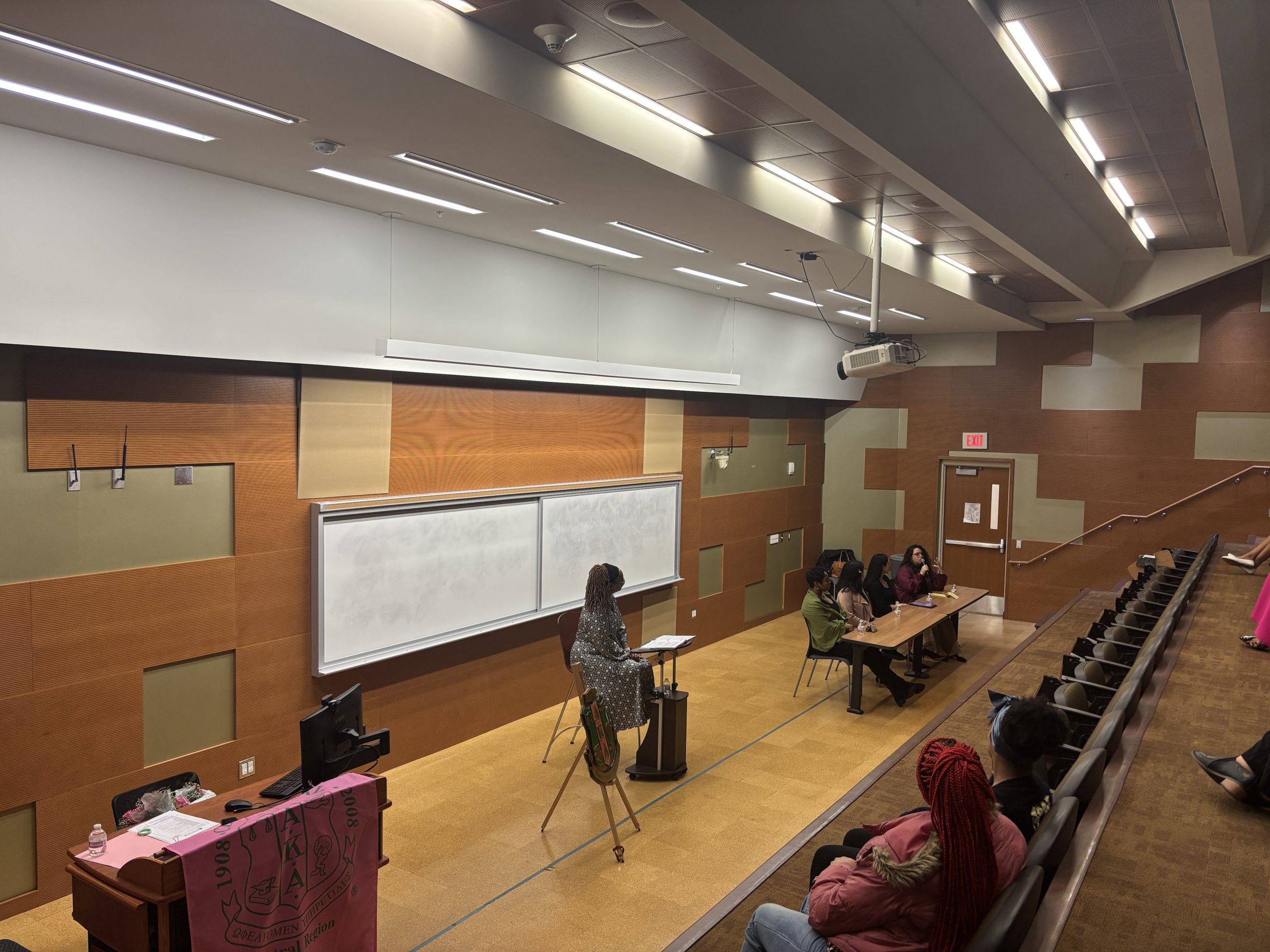
On Friday, Alpha Kappa Alpha Inc. (AKA) had its annual “Women in Politics” panel to discuss immigrants’ rights.
The panel was entirely woman-led and featured five different panelists – all women who are heavily involved in politics. This included senior policy analyst Parker Davis, co-founder of Peoria for Palestine Estrella Diaz, multimedia graphic designer Hannah Hernandez and sophomore political science major Tayra Febles-Bula.
AKA president and senior journalism major Kacy Hendricks remarked on the value of having these women in one place.
“Women are overlooked when it comes to these things, especially in politics,” Hendricks said. “We want to make sure we are encouraging other women to have a voice and maybe go after those dreams of being in politics.”
The panel was moderated by Sherry Cannon, president and founder of Hope Renewed, who would ask questions of each panelist.
Panelists were then asked what type of challenges they faced as women in politics, given that it is a male-dominated field.
“Just being a woman in general will be very difficult, considering women still face that barrier in any area,” Hernandez said. “Your voice tends to be less important, [people believe] we lead by emotion and that we don’t ever know what we’re talking about.”
After providing some background on how they navigated these challenges, the panelists transitioned to the topic of immigrants’ rights, responding to questions about recent Immigration and Customs Enforcement (ICE) operations.
Panelists shared what others can do to ensure that immigrants and their families feel safe within this political climate.
“Learning how to be an ally for people that are part of the immigrant community is showing up in these spaces and [referring] them to organizations such as the ACLU, who have training courses on knowing your rights,” Diaz said. “I think organizations can also reach out to these communities and meet them where they’re at to hand them cards and just, as a community, organize.”
Cannon’s next question shifted the focus towards race relations, specifically between black and hispanic populations.
“We, a lot of times, think about it from our community, individual or interpersonal level, but structural racism and white supremacy is a very real thing,” Davis said. “We have to make that the center of what we want to attack and then work on the interpersonal things.”
To end the panel, Cannon had the panelists answer what everyday citizens, especially women, can do to be more involved, prompting a discussion on the role women have played in politics historically.
“Women are at the center of community building and foundational things,” Febles-Bula said. “During Nazi Germany, women were essentially at the front lines investigating Nazi soldiers, and it’s because women were able to coalesce with each other that they were able to build community and fight for a greater cause.”
“Women in Politics” was one of many events AKA planned to celebrate Women’s History Month. The organization is currently collecting feminine hygiene products to give to women in need and looking forward to events such as “Mom and Company” to highlight the role mothers play.
“Bradley is a predominantly white school, and you do see a lot of males. However, there are a lot of women on campus,” Bianca Brown, Bradley alumna and president of AKA’s graduate chapter, said. “There are a lot of organizations that were founded by women and are led by women, and we have a lot of things to say.”