
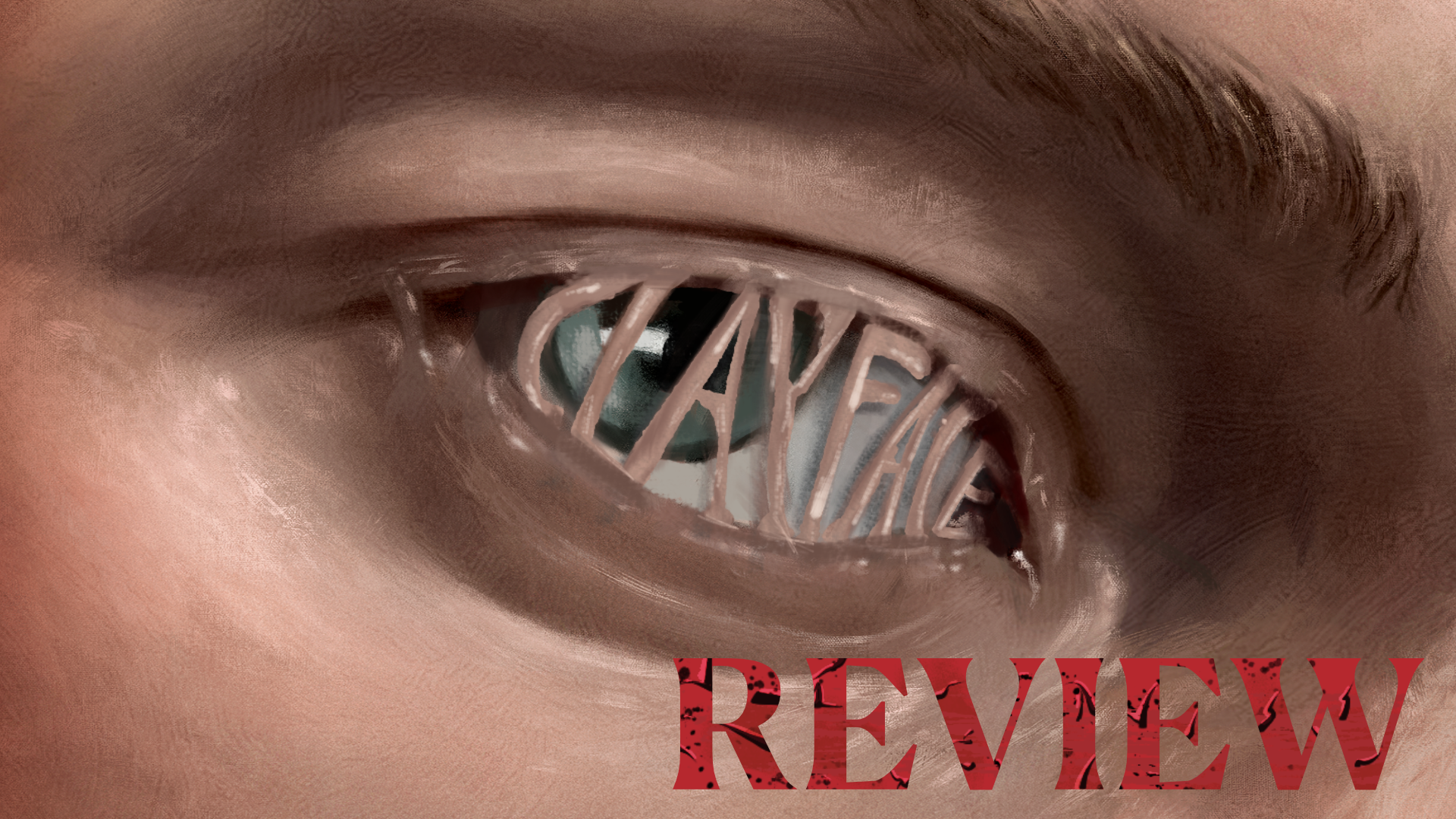
This review contains spoilers for “Clayface”
The DCU’s latest film, “Clayface,” proves that understanding a villain doesn’t mean pardoning him.
It feels weird to realize you’re rooting for the villain, but it’s even worse when you understand why.
“Clayface” understands this better than most comic book movies. Through grotesque body horror, the tragic struggle spirals into madness as the movie forces people to empathize with a character who slowly becomes everything Gotham fears. Most importantly, the movie never confuses empathy for innocence.
Matt Hagen (Tom Rhys Harries) has everything going for him.
He’s an actor with a future, a face that can carry his career and a life worth living. But after a night out at a club goes horribly wrong, Hagen finds himself at the mercy of Gotham’s corruption, with his face disfigured and his future decaying.
Hagen’s attempt to reclaim his old life leads him down a path that transforms him into something far more terrifying than he could have imagined.
Director James Watkins doesn’t waste much time showing Hagen’s world, his motives or what sets up the chain reaction that turns him into what he is. The movie is easy to follow without any prior background in the DC Comics universe. In the first act, the film lays the foundation for a story that is as much a psychological tragedy as it is a horror.
And the horror is disgusting.
The film’s body horror recalls “Darkman,” using grotesque transformations to make audiences physically uncomfortable. Hagen’s disfigurement is startling, but watching him experiment with his body is somehow worse. His morphing abilities are fascinating, yet the film presents them in ways that make you want to look away. Several sequences left me squirming in my seat, and more than once, I genuinely couldn’t watch.
But the disturbing imagery serves a purpose.
Hagen initially sees his transformation as a chance to rebuild his life. After an overdose on the experimental nanites provided by Dr. Caitlyn Coor (Naomi Ackie), Hagen discovers that his body can reattach its own pieces, and a game of basketball becomes an unexpected glimpse of a new beginning.
For the first time since his disfigurement, he feels alive again.
Unfortunately, Hagen’s hope makes his eventual downfall all the more painful.
Harries delivers an outstanding performance, capturing both Hagen’s desperation to recover his former identity and his growing willingness to abandon it. Hagen’s acting career becomes particularly compelling as he begins using his abilities to embody other people. The man who once built a career pretending to be someone else can now literally become them.
It’s an unsettling extension of his life, and Harris makes the transition feel unnervingly natural.
The nightclub sequences are among the film’s strongest set pieces – especially in the final act, bringing the film full circle. “Clayface” shows Hagen increasingly embracing his villainous identity, fully becoming the monstrous persona he saw from the very beginning.
What begins as a story about a man trying to reclaim his identity and career becomes a darker story about a man realizing that becoming a monster is easier than living with what happened to him.
Yet, Hagen’s suffering does not excuse his actions.
The turning point comes when we learn that Hagen murdered John Borrelli (Max Minghella), Caitlyn’s fiancé, in his desperate pursuit of her love.
Until then, it’s easy to become caught up in the injustices Hagen has endured. But watching him cross that line forces you to see what he’s become.
Hagen’s manipulation of Caitlyn, insisting she is the only person who can calm him down, further exposes how his desperation has turned dangerous.
Naomie Ackie’s performance grounds the movie amidst Hagen’s increasingly disturbing journey, giving his relationship with Caitlyn genuine weight beyond simply motivating his descent.
Gotham City itself is another highlight. The DCU’s first extended look at the city is appropriately glamorous, foggy, and corrupt, with sweeping aerial shots establishing a world that feels alive even as its inhabitants rot from within.
The film also resists the temptation to bring Batman into the story. Hagen’s downfall is compelling enough without the Dark Knight showing up to explain its significance.
“Clayface” is a polished solo villain movie and a solid DC film, and one of the better additions to the newly rebooted DCU. “Clayface” makes its protagonist easy to root for, proving that making a villain understandable is far more interesting than making him innocent.
By the end, I still felt bad for Matt Hagen, though I acknowledged he’d become dangerous and was responsible for the harm he caused.
Both things can be true at once.
Sometimes, the scariest monsters aren’t the ones we fail to understand – they’re the ones we understand too well.