
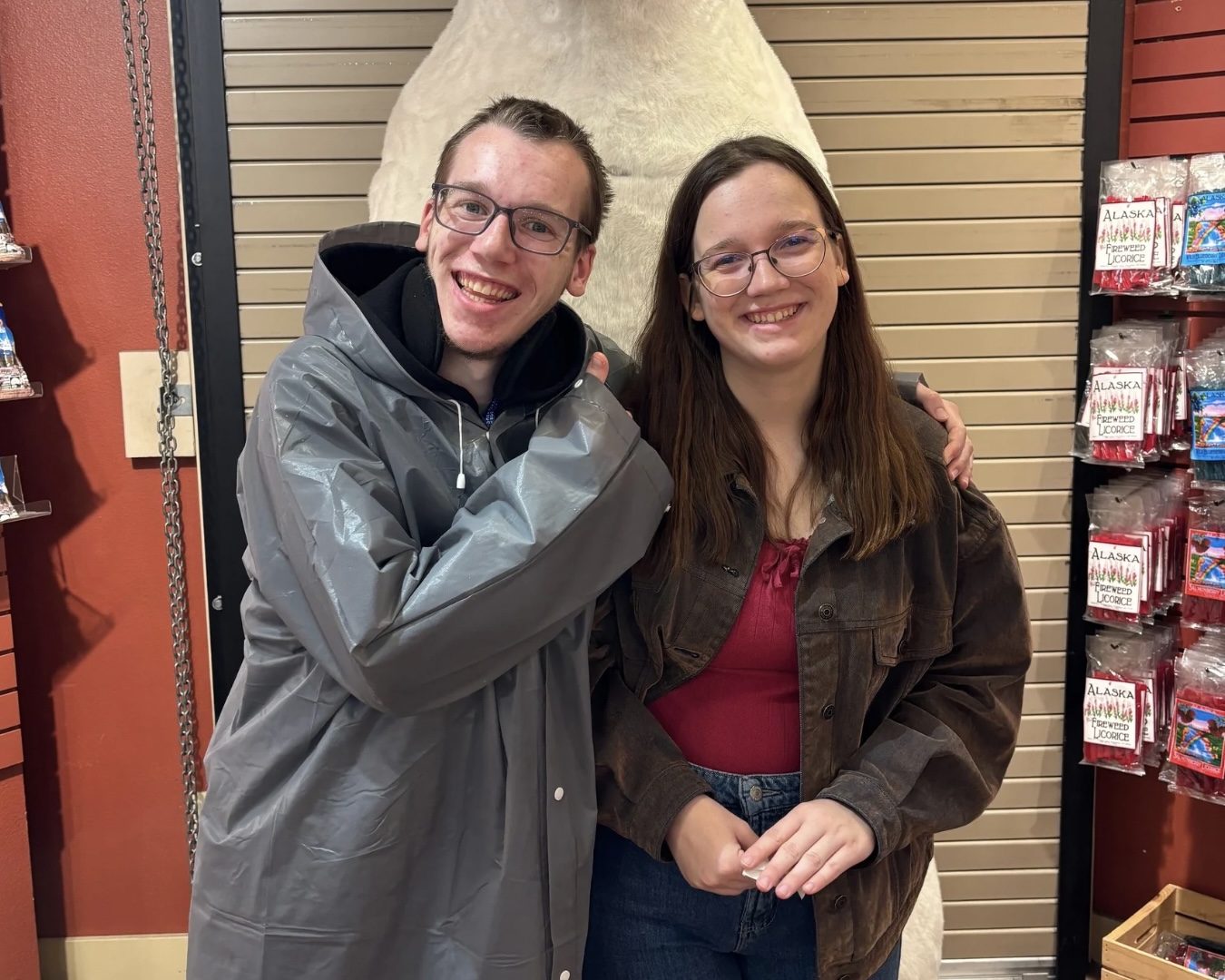
Growing up, my brother and I had a fantastic system for Halloween.
He doesn’t like chocolate, and I pretty much only like chocolate. When we got back from trick-or-treating, we would pour out our buckets and separate the candy so we could swap accordingly. He once told me he didn’t understand how I could like chocolate but not Starburst. I told him I only like the red ones, and it’s something he’s never forgotten.
My brother is on the spectrum; he’s high-functioning and incredibly sweet, but has always had a hard time understanding social cues and fitting in.
The world seemed to have it out for his heart. He got so upset by things no one else seemed to see: loud noises, weird textures, people’s actions. He liked video games and sharks, and didn’t have much patience for anything else. He didn’t have any real friends in school and constantly got in arguments with his teachers.
So instead of being another instigator, I was his mediator.
I calmed him during meltdowns, advocated for his opinions and translated his thoughts into concepts our parents could understand. I learned his language and patterns, the way he thinks, how he processes things most people don’t think twice about.
I’m not saying I was like his mother – our mom did a very good job at not letting me take on more than I should – but there was always a part of me that felt parental and protective.
I was jealous of the way my friends got to interact with their own siblings. They fought over toys and TV. They made each other mad and then made up. They got to be fierce enemies, but also fierce friends. It’s not like I wanted to fight with my brother, but I knew that if he upset me and I slipped up and snapped back, he wouldn’t be able to take it the same.
Our dynamic shifted as he needed it to, and when we were little, he mostly needed an interpreter.
My brother started speaking at a typical age, but his words were garbled and difficult to understand well into elementary school. His attempts to communicate concepts baffled adults. “Bucket” became “ermty wader (empty water)” followed by frantic gestures with his hands to try and communicate a picture. My parents would try valiantly for several minutes, until he was on the verge of tears and I was called over. He would try again, eyes begging me to understand, until I walked over to grab his pail for making sand castles.
I got really good at it. I could correct my parents immediately, before he could even well up with tears. Years later, after he graduated from speech-language pathology with a gold star, he still didn’t always know how to arrange the words correctly, but at least he could say them clearly, and I still stood at the ready to help him say what he meant.
He started learning Taekwondo, and it kind of changed everything. It taught him to be more in control of himself and his feelings. It gave him something to do that involved interacting with people, while clearly outlining what was expected of him. It built his patience and confidence at the same time.
His sophomore year of high school, my parents insisted he go to homecoming. Just for a bit, so he could say he did it. They sent him there with a $20 bill. He came back with 10 rolls of Starbursts. The money was intended for an entry fee and maybe a bottle of water.
Apparently, when my parents came to pick him up, he still had the full $20 and thought he had to spend it all, so he panicked and bought 10 rolls of Starburst for $2 a piece. We laughed about it at dinner the next day and now had a bin in the pantry full of nothing but Starburst.
The Starbursts became our thing. When I was bored or sad, he would pick out a red candy or two from his stash and hand it to me.
When I left for college, he wasn’t expressly upset. In fact, when he helped me move in, he was pushing my parents to leave sooner so he could get back to his video games. But he also hugged me tighter than he ever has before they drove off.
I spent my first semester enjoying school, but also wondering how his junior year was going. His typical response to a “how’s it going” text was usually “fine, why are you texting me?” and the driest answers known to man until you stopped making his phone buzz. I saw him on FaceTime with my parents, and they kept me updated, but at the end of the day, they could only translate so much. I was always the one who smoothed that communication. They didn’t speak his language in the same way I did.
When I saw my family again for the first time since I moved into the dorms, I didn’t expect my brother to be the first one in my arms. He jumped out of the car the second it stopped moving and ran into my embrace. I lifted him in our hug, the same way we used to do as kids. He clung to me, and I realized it was the first time I could clearly tell that my brother really missed me.
My little brother is an adult now. Nineteen years old, almost 20. He started his freshman year of college in the fall of 2025.
My whole family was a little worried about him moving out. He is an academic genius, but not a social one. Luckily, he really found his place. The campus is built for him. There are a lot of (for lack of better terms) socially awkward nerds just like him.
He finished his first year of college this summer. He had campus dining dollars left, and in an effort to spend them all, bought at least 30 rolls of Starburst. We laughed about it at dinner, as we did for his sophomore year homecoming, and let him fill a basket in the pantry.
My last summer at home was hard, but every morning when I came downstairs, I just happened to find three red Starbursts at my spot at the kitchen table.
I nearly broke the fourth time it happened. I’ve always felt a little like I was failing him. I was missing something and couldn’t understand the way I wanted to, the way he deserved.
I watched my friends help their siblings, and their siblings help them. I saw the TV shows. We didn’t look like that, but we never had to. My brother didn’t know how to gossip, but he knew how to share his candy. I didn’t always know how to protect him or find him friends, but I knew how to play his favorite video games and advocate for him.
Sometimes I feel like there’s this wall between me and my brother. I want to love him in the way he needs, and it’s not always easy to figure out, but we do know each other in ways others don’t. My brother has a hard time understanding what most people are feeling, but he’s always done a pretty good job at trying to understand me.
I can read the things he doesn’t know how to say through the red candy he gives me.