
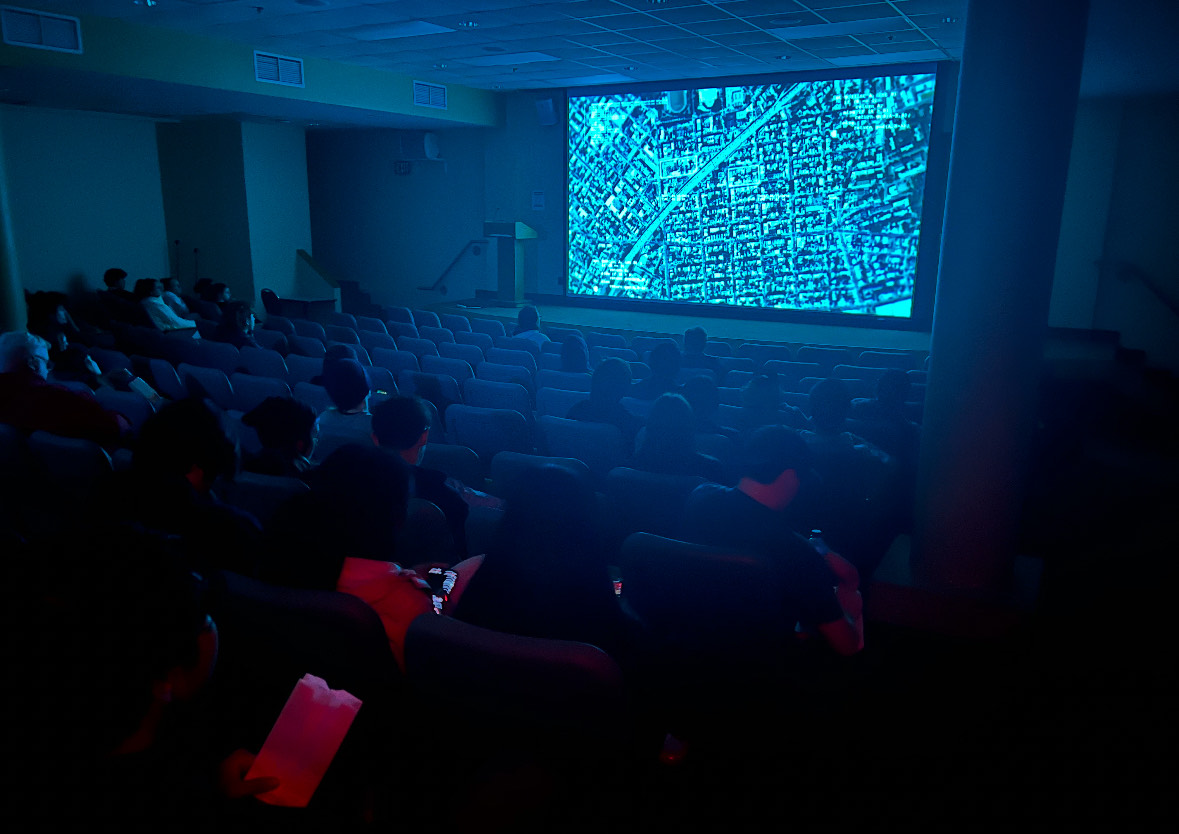
The screen flashed from technical explanations of algorithms to the red and blue lights of police cars as “Computers v. Crime” played in the Marty Theatre on Oct. 22.
The movie night, hosted by the cybersecurity club, closed the curtains on the club’s Cybersecurity Awareness Month events.
“We usually do a movie every single week leading up to BSides Peoria,” John Ocampo, cybersecurity club social media coordinator and computer science major, said.
Despite the film being about cybersecurity, the event was open to all majors.
“[Hackers] don’t just go after cybersecurity people. They go after everyone,” Zane Scott, cybersecurity vice president and senior cybersecurity major, said.
However, while many Bradley students know the risk of being hacked and receiving phishing emails, Scott noted that more students need to work on their online hygiene: practices to protect their digital information.
“Cybersecurity month is an important month for everyone to try and keep [the] best hygiene online,” Scott said. “Nowadays, often you see people reusing passwords, using insecure passwords and not using multifactor authentication.”
This was the last movie night of the club’s Cybersecurity Awareness Month events, and awareness also extended to privacy risks and AI developments.
“Computers v. Crime” highlighted the debate over predictive policing, in which algorithms use existing criminal records to track people who haven’t offended yet.
While the crime-prevention process would be more efficient, predictive policing still poses problems.
“[The AI]’s practically already trained to target minorities over the average because it’s taking in data that has been historically biased to try and predict who is going to commit crime,” Scott said.
The issue may seem secluded to a documentary, but it has grown closer with the Peoria Police Department adopting Axon Fusus.
“If you know of Axon, you probably know [police] body cameras and tasers,” Scott said. “They’re also trying to push for this new system called Axon Fusus, which allows you to link privately owned and publicly owned surveillance cameras into the same place, as well as integrating automatic license plate readers. Ultimately, while the police agencies do have access to the data, so does this third-party company.”
The cybersecurity club will continue to raise awareness and expose Bradley students to cybersecurity through competitions held in the spring semester. For now, they’re looking forward to BSides Peoria on Oct. 25.
“BSides Peoria is a large cybersecurity conference in the greater Peoria area, where a lot of cybersecurity professionals, students, and Bradley alumni come by and essentially see what’s going on in the community in terms of online security, physical security and on campus,” Ocampo said.
More information about this can be found on the Connect Peoria website and at the BSides Peoria event.