
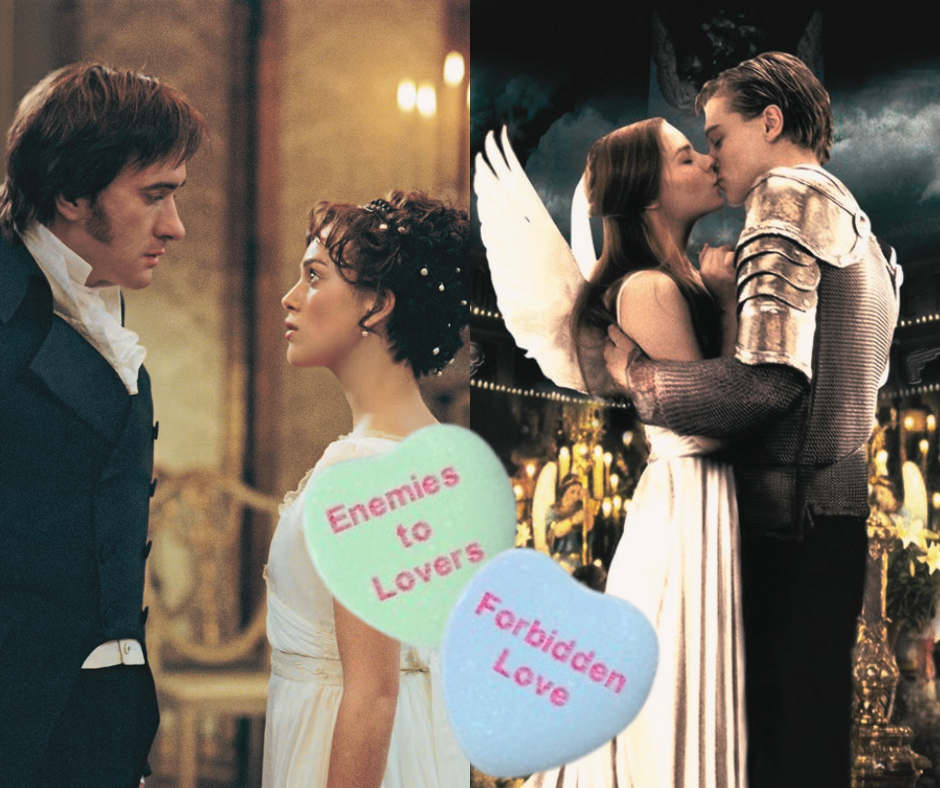
There’s no better time of year than Valentine’s weekend to fall into a good love story, whether on the page, the screen or in real life. But not everyone is drawn to the same kind of romance. This Valentine’s Day, Co-Editor-in-Chief Scarlett Binder and Assistant News Editor Injy Wasfy debate which trope reigns supreme.
Forbidden Love
Scarlett Rose Binder
Over four centuries after it was written, “Romeo & Juliet” remains one of the most legendary love stories of all time. There’s a reason for that.
Shakespeare didn’t just tell a love story; he created the blueprint for forbidden romance – star-crossed lovers living in a world determined to keep them apart. It set the precedent for how thrilling every iteration of the trope tends to be. An outlawed love is more precious, more urgent. It’s addicting.
Sure, enemies becoming lovers can be exciting. But don’t you tire of waiting for the protagonists to get out of their own way? While tension is hot, the tension in forbidden romance is different. Rather than two people fighting each other, it’s two people choosing each other, even if it means fighting everyone else.
Forbidden love has consequences. It defies the stars. And if that doesn’t make you swoon, I don’t know what will.
There’s a rare kind of passion that pours out of two people who find each other irresistible – one that I don’t believe can be paralleled.
Enemies-to-Lovers
Injy Wasfy
In a world where true love can turn into true crime, the psychology behind the enemies-to-lovers trope stands apart. It doesn’t matter whether they’d be good together in theory or that everyone sees what’s really happening except for them, what makes it interesting is all the projection that happens within the characters themselves.
This is just one of those tropes anyone can enjoy for that reason — it’s not just romance for its own sake; it creates characterization by telling readers where both are lacking. While you could get worldbuilding with forbidden love instead, it doesn’t serve the story as much when you can have it by identifying the color of the curtains.
Characters are what bring stories to life. “Pride and Prejudice,” for example, thrives on the way Mr. Darcy and Elizabeth take one bad impression and roll with it, becoming enemies. But the book isn’t called “Misunderstandings and Plot Contrivances,” because it’s not what the world does that makes a relationship special — it’s the things that characters choose on their own terms that keep everyone flipping the pages.