
This article contains spoilers for “Primetime” (2026)
There’s a shot about 10 minutes before the climax of “Primetime” that manages to perfectly distill every nuance of Lance Oppenheim’s incredible feature film debut into a single moment.
Dan Plumb (Skyler Gisondo) stands in front of a wall at a police station filled with missing kid posters, practicing his apology to a friend. Then, Chris Hansen (Robert Pattinson) calls him into the other room to help catch a predator, away from a potential reconciliation.
What would’ve happened if he wasn’t there?
“Primetime” follows Hansen on his quest to make “To Catch a Predator” the biggest television show in America.
The film is harrowing. It’s demented. It’s been divisive among the public.
It’s the best movie I’ve seen in over a year.
I’ve racked my brain trying to find a single frame I disliked, and if it exists, I haven’t found it.
That feeling starts and ends with Lance Oppenheim’s extraordinary direction.
This movie takes so many visual risks that there’s not really specific moments that stand out. I was in awe the entire time. Every frame is vibrant and full of character, with gorgeous ocean blue color grading. Not a single pixel is wasted.
Static shots are framed masterfully. Moving shots are perfectly motivated. Every moment is dynamic and exciting, even when the subject matter is horrifying.
This is a deceptively complex film. As can be expected, that shred of nuance is too much for many people, some of whom have been quick to label this film as “pro-pedophile” for daring to criticize Hansen.
Because yes, “Primetime” is deeply critical of him.
The film is very obviously not biographical. It depicts real events but floats in and out of reality enough that it’s better understood as historical fiction than anything else.
But if you walk out of the theater thinking it’s taking the pedophiles’ side, maybe the whole watching movies thing just isn’t for you.
“Primetime” is about bad people doing bad things to other bad people for the wrong reasons. Never is an offender painted as good, or misunderstood, or anything other than evil.
That doesn’t mean the people stopping them are saints.
Chris Hansen is very obviously a man who has lost his way. He’s chasing a high that he, on some level, knows he’ll never reach.
So he turns himself into a perfectionist.
He rehearses what he’ll say when he reveals himself to the target dozens of times. He rerecords his voiceovers again and again. He constantly pushes himself until his desire to be great becomes a crutch on which he places the weight of all his shortcomings.
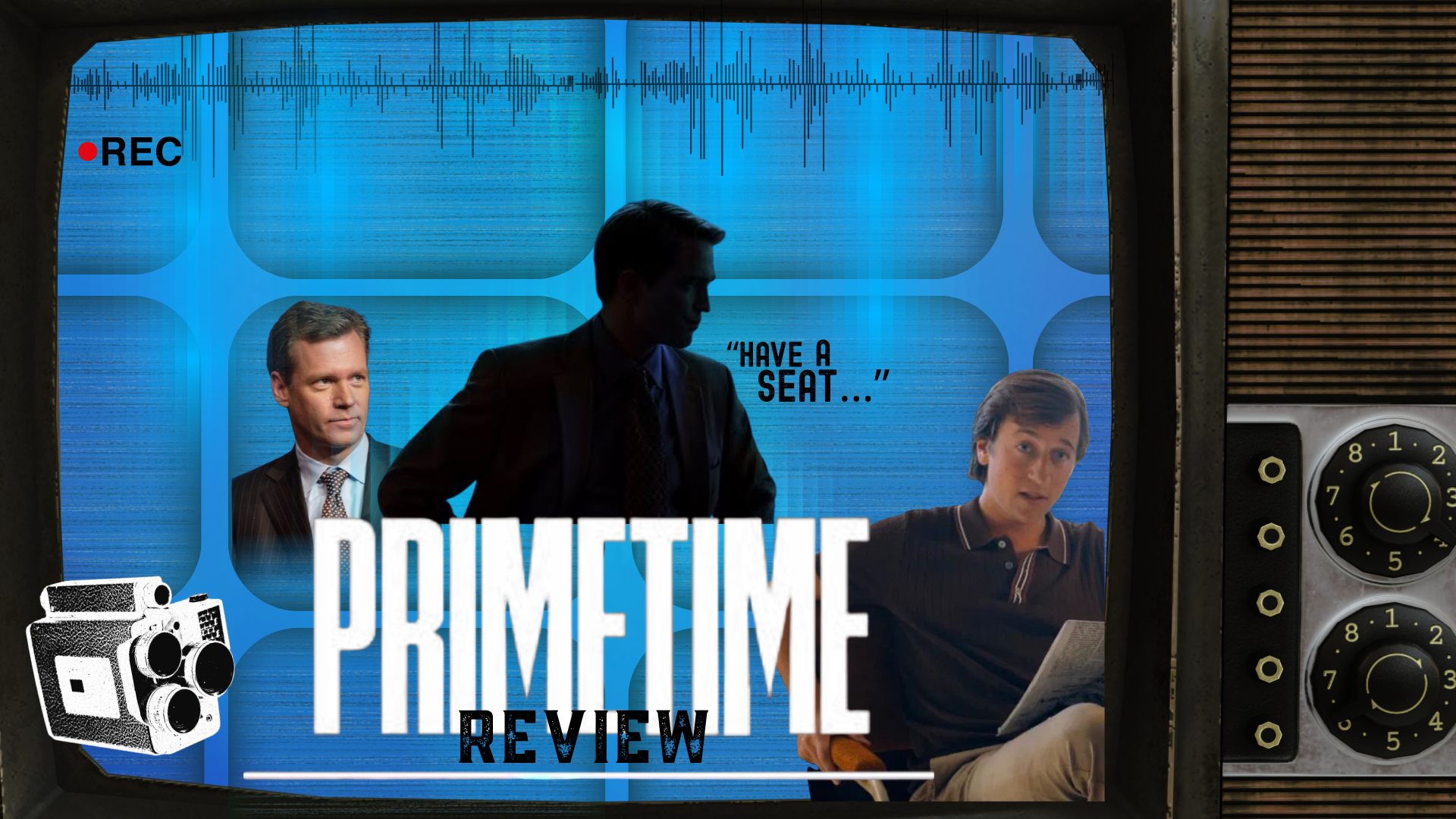
He practices his catchphrases religiously, like “have a seat,” “you see how this looks right,” and, most importantly, “what would’ve happened if I wasn’t here?”
Robert Pattinson gives, hands down, the best performance of the year. He transforms into Hansen so completely that, by his first appearance on screen, I was completely bought in. He manages to make a real person entirely unpredictable while never sacrificing characterization. He is Cillian Murphy as Oppenheimer levels of good.
The best part? His supporting cast is in lockstep with him.
Merritt Wever is gloriously conniving as producer Andie Bender, taking a malicious glee in her work that’s only matched by Hansen himself. She’s given plenty of opportunities to get out of a situation she doesn’t need to be in, but there’s nowhere she’d rather be.
Skyler Gisondo is equally fantastic as “Decoy” Dan Plumb. As perhaps the only member of the cast with a shred of humanity left, his burden is the heaviest of all. He serves as the focal point for the audience, the newbie in a world of professionals. We’re introduced to all of this through his eyes.
Plumb and Hansen’s relationship is, in many ways, the lynchpin of the film. Sure, the theatrics of the show and process are compelling, but the way these two characters connect is the true centerpiece.
Plumb starts off reticent, unsure of what he’s auditioning for, in over his head when he starts. It’s only after Hansen sits down to talk with him, opening himself up to be a mentor, that Plumb finally buys in. Over time, Hansen affirms Decoy Dan more and more, and Plumb is willing to do more for Hansen in return.
Hansen is grooming Plumb from their very first conversation.
It’s a brilliant way to show off just how far Hansen has fallen by this point. He’s willing to do anything to hold on to his fame, even if it means resorting to the tactics of the people he so rightfully decries as evil.
Of course, he doesn’t get to enjoy that fame.
Hansen is also engaged with the imminent fallout of his extramarital affair being exposed to the public. Almost every time he is recognized, he is dealing with the one thing that requires his undivided attention to cover up. By combining these two plot points, “Primetime” perfectly encapsulates what went wrong with Hansen’s approach.
The pedophiles aren’t the only predators on the show.
Hansen’s two most important storylines in his personal life are him trying to hide an improper sexual relationship and him manipulating a young man to become close to him.
It’s such a transcendent piece of writing – an implication that is never explicitly stated, but provides an undercurrent of unease throughout the entire movie.
Reality backs up this reading of the film too. Only about 40% of Hansen’s real life predators were ever convicted, compared to 75% to 90% of normal child sexual abuse sting operations. The real Hansen often skirted legality for the sake of entertainment – a fact that doesn’t go unaddressed in “Primetime.”
In his quest to find a “big fish” predator that will shock the world, Hansen abandons the previously agreed upon shooting schedule to take the crew down to Texas. There, they believe they are tracking someone in high levels of government. The thing is, to do so, they have to ignore the predators they are confident inhabit their other location, Jersey Shore.
Again, Hansen prioritizes potential over actual protection. Despite him constantly justifying his tactics as a way to protect kids, he chooses the possibility of a high-profile predator over the very real perpetrators that he knows for a fact exist.
What might’ve happened because he wasn’t there?
Did those perpetrators assault children that would’ve otherwise been stopped by Hansen? Who knows? And that’s exactly the question the movie wants you to ask, because we truly don’t know what would’ve happened.
In the film’s final act, the crew has their “big fish” on the line, and they try to reel him in. They discover that the predator is a district attorney, but in their fervor to get him on television, they scare him away.
This is where the shot of Plumb is found. As the police department uses every single resource available, a wall of missing children posters sits behind him, unaddressed and disregarded in favor of the man who could provide good publicity.
So they break the rules. Instead of the predator coming to them, they’re going to the predator. As they spring their trap, the would-be-predator commits suicide.
The police are dejected. Plumb is horrified. Bender is cautiously optimistic that she can make it all work out anyway.
Hansen, not knowing what to do, rehearses his lines.
As the cameras shut off one by one, Hansen says his iconic catchphrase, dripping with new meaning.
“What would’ve happened if I wasn’t here?”
It’s the best moment of any film this year by a country mile.
Suddenly, a movie which has been telling you to ask questions throughout its entire runtime now demands that you answer them.
What would’ve happened? Would a child have been assaulted? Would the perpetrator have been caught and convicted anyway?
Is any of this worth it?
The best movies are ones that make you think. I haven’t stopped thinking about “Primetime” from the moment the credits rolled. It’s so thematically rich that it will almost certainly take multiple viewings for me to digest everything.
This film lives in moral gray areas. Depending on your own predispositions, you may come away with a completely different conclusion than I did.
But even independent of the themes, “Primetime” is a triumph.
It has perfect performances up and down the cast. It’s a tight, perfectly paced and edited 110 minutes. It’s got the most dynamic camera work of the year, combined with some of the most electric cinematography I’ve ever seen.
If you haven’t yet, “have a seat” in your nearest theater. You won’t regret it.