
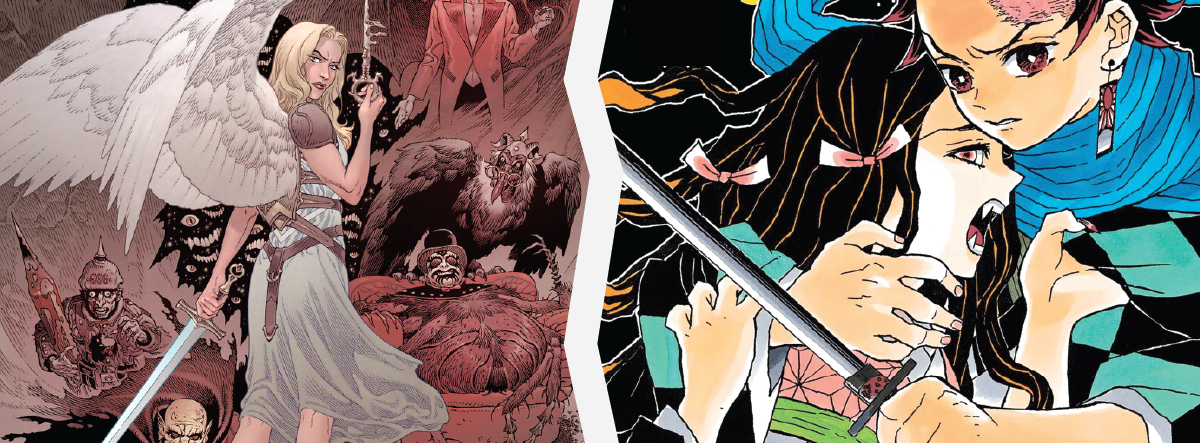
Tradition can be a major obstacle in any field, as new ideas are snuffed out in favor of played-out practices. Comic books have lately been both a major source for adaptation in Western entertainment and a major area where tradition’s effects can be seen firsthand.
Marvel and DC are two of the largest media franchises that have capitalized upon this landscape. Even independent comics, those that are not part of the two major publishers, have been the source for shows like “Locke and Key” and “The Umbrella Academy.”
Now, it wouldn’t be wrong to think that the comic book business must be thriving after all the attention these films and television adaptations are receiving. However, it’s actually languishing at an alarming rate. Comics that are in print and published by companies like Marvel, DC, IDW, Image and others make up a smaller overall market than you might think.
Problems plaguing the industry include sites that pirate the digital copies of comics, COVID-19 closing down many physical stores and the emergence of graphic novels, all of which have combined to create a lopsided market.
Graphic novels in particular have grown popular due to the complete nature of the story being told in a volume and not just an incomplete single issue. In fact, this problem of lengthening stories beyond one volume, issue or any other format has made these stories take a dip in quality.
The additional fact that comics are not cheap, roughly being $4 or $5 per issue or $15 to $25 for a collected edition, means that as the quality goes down, the price goes up, and readers are incentivized to buy more if they want some sort of closure.
The independent side of American comics gets little attention partly because of the sheer lack of advertising and expensive labor driving all comics prices up, making consumers unwilling to take chances on untested teams and rather turn to something else.
An entirely different market has started to seriously overtake comics: manga. One manga alone, “Demon Slayer,” managed to outsell the entire American comics market when a new volume of it was released.
Why? Various cultural and economic factors give Japanese entertainment an edge in this field.
These factors include manga being printed in black and white, driving down the printing costs, and the labor used to create such content being done through a singular artist (referred to as a “mangaka” in Japanese). These artists write and draw the story themselves with only slight help from assistants and editors.
However, there are also problems with the manga industry as well, starting with the heavy amount of pressure and the intense scheduling for each week the mangaka has to put something out. Anywhere from 40-60 pages of art have to be planned and drawn each week, thus putting enormous stress on the level of quality a manga artist has to strive for. Even then, the manga field is very narrow with few alternatives.
Another problem is the lack of deviation in style from much of the industry. There are few artists who manage to make a living and go beyond the strict sales targets while maintaining a distinctive style.
Manga also has a lot of safe stories done by authors who adapt “light novels,” which are equivalent to pulpy stories and use simple, easy-to-read language. Cheap entertainment and a huge portion of manga adapts those novels, which leads to a large amount of uninteresting content.
The style that is expected out of American and Japanese artists is rigid and recently there have been success stories with those who blend the two schools of thought.
For example, “One Punch Man” takes inspiration from American comics in its story and characters and, in a rare moment, even uses color at one point to showcase a dramatic moment – which is a large departure from the norm.
These problems have made themselves known for a long time, and hopefully the ideas of both the West and East can come together and mutually benefit both.