
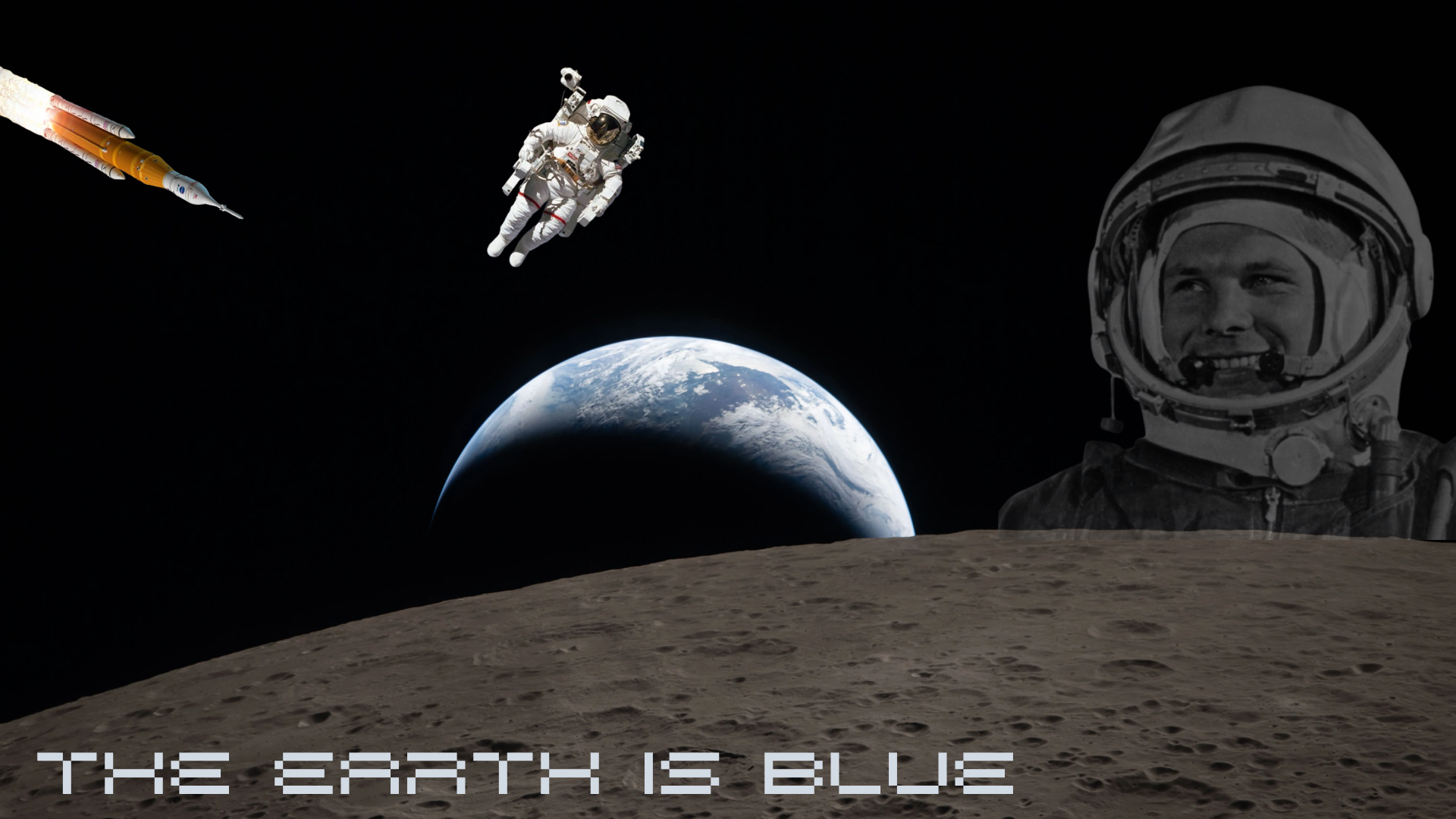
When Yuri Gagarin became the first human to enter space, his first reaction to the planet we call home wasn’t a rehearsed one.
Neil Armstrong’s “one small step for man” immediately became the defining quote in the history of space exploration when he walked on the moon, but Gagarin’s more blunt approach has always stuck with me more.
While becoming the first person to ever orbit the planet, Gagarin looked down on his home world and made a simple remark.
“The Earth is blue,” he said.
For that moment, the fervor of the space race and the Cold War had washed away. The geopolitical strife, the tests, the tension and the fear of nuclear annihilation all dissipated under the weight of seeing something from a perspective no human ever had before.
That’s how I feel looking at the photos from the Artemis II.
The Earth is, by most accounts, not a great place right now. Authoritarianism is on the rise. Genocides are happening on multiple continents. War is breaking out across the world.
But looking at the photographs from a quarter of a million miles away, none of it matters.
This phenomenon is often called the overview effect. Astronauts gain a sudden and profound appreciation for humanity on a global scale once it’s viewed in its entirety from way up. As I watch the astronauts aboard the Artemis II interact, I’m filled with the same childlike wonder I was when I was a kid learning about space.
When they flew by the moon and slingshotted around it, they witnessed parts of the celestial object no human had ever seen before. One of these was a bright crater on the moon’s far side.
As they passed the crater, the crew proposed a name for the impression: “Carrol,” after the late wife of Commander Reid Wiseman.
Even farther away from Earth than any human had ever been, their thoughts were inexorably linked back home.
That’s why this journey is so special to me. It represents so many things that are rare these days. This isn’t a corporate endeavor hoping to generate buzz. It’s not a strategic mission by a government to gain an edge over a rival nation. It’s a scientific expedition, aiming to gather more information about our closest celestial neighbor while helping us learn more about ourselves.
My favorite photo from the crew so far has been dubbed “Earthset,” a counterpart to the iconic 1968 photograph “Earthrise.” In this photo, the Earth peeks over the moon’s surface, with white clouds and blue oceans visible atop a mostly shadowed planet.
It’s an immensely humbling piece of photography, and it feels like it could be indicative of where our planet is now. Six decades ago was the dawn of an era. Now the Earth is setting, plunging into the darkness.
But there’s still some light left.
There are people like the Artemis II crew, running tests and working every day to get home just so other astronauts will actually be able to stand on the moon’s surface. There are people still on Earth who work every day to make it a better place.
Reflecting on his experience seeing Earth from space, Yuri Gagarin said, “People, let us preserve and increase this beauty, not destroy it.”
More than 60 years later, we’ve certainly done much more destroying than preserving and increasing. But we have done some good work in the intervening years.
With all of humanity’s ups and downs, there’s one thing these Artemis II photos have left no doubt of.
The Earth is still blue.