
Three years ago, a global pandemic ended – for humans.
Yet, another looms in farms; for chickens, the H5N1 bird flu is spreading through herds and leading to higher egg prices.
Even though recent developments suggest a vaccine is almost ready, researchers like Clara Shaw, an associate professor at the University of Minnesota, note that diseases common to animals shouldn’t be ignored.
“With many spillovers and few emergence events, a major challenge of today’s research on infectious disease is to predict which pathogens have the potential to emerge in new populations,” Shaw remarked in her most recent study on spillover prediction – how likely diseases are to move between species, including to humans.
More recent than the study, however, is Shaw’s virtual visit to Bradley. John Marino, an associate professor of biology, highlighted the importance of exploring current events through the lens of those on the front lines.
“I just wanted to give a chance for our students to [explore] different types of research projects,” Marino said. “We just lived through the pandemic, and there is fear of a new one due to things like the avian flu, for example, that could pose a risk. So, trying to understand what leads to persistence and spillover events is very relevant research.”
Shaw’s presentation on virus persistence – how long a virus can survive within a population – prompted discussion of another disease students are more familiar with: COVID-19.
”We probably all had [COVID] like five or six times. So, it’s like influenza in that way, where we can keep getting it over and over again, because it’s changing enough. And that evolution is now driven by host immunity, so it keeps escaping and it can impact again,” Shaw explained. “I don’t think it’s going anywhere.”
But virus research isn’t the only way to combat this.
The common conclusion is that the persistence solution is prevention. The fewer chances a virus has to mutate, the less likely it is to become immune and therefore persistent.
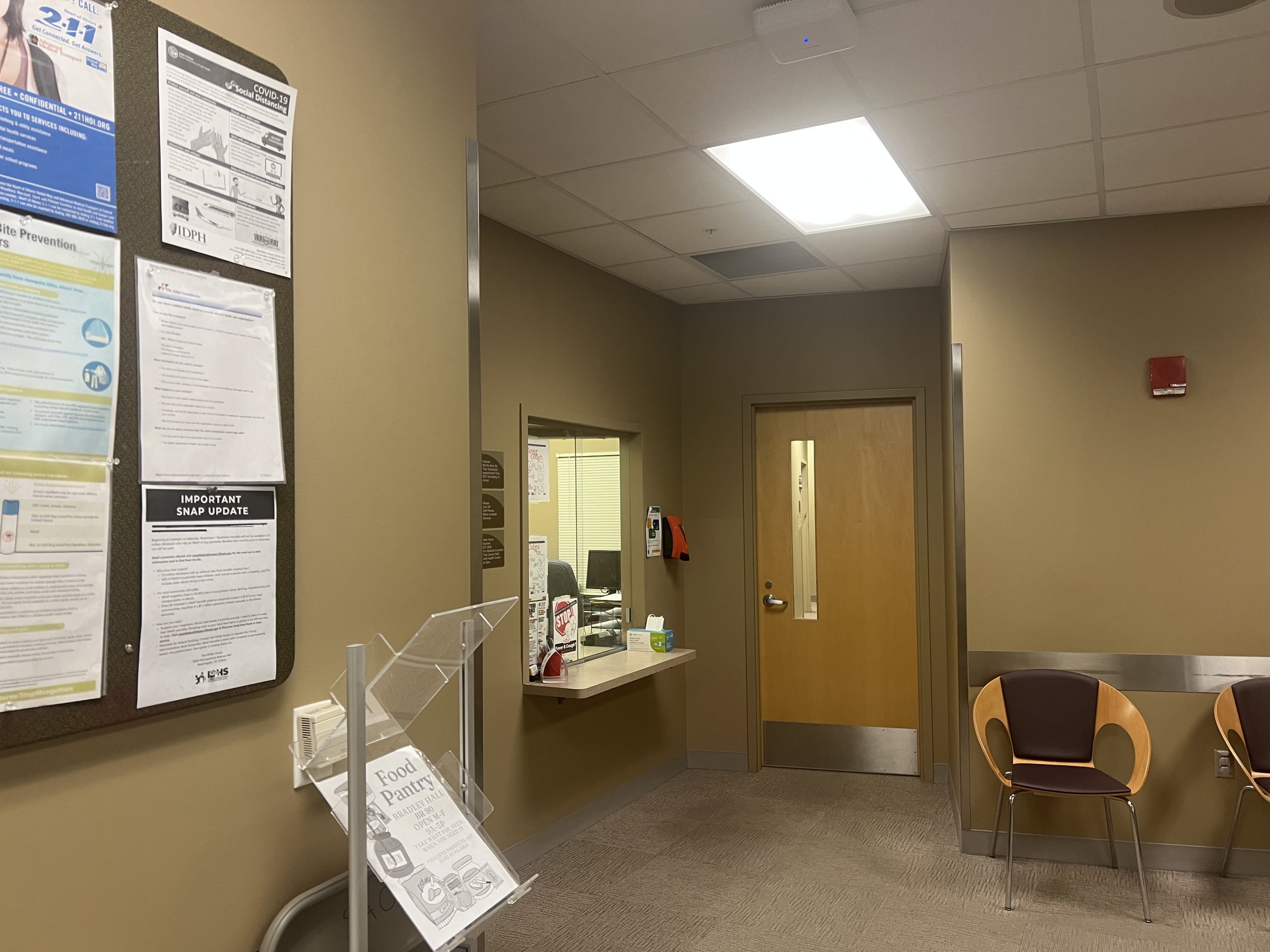
Beyond research labs, the Markin Health and Wellness Center’s medical director Mallory Kelly reminds students of prevention practices to keep in mind this season.
“If you are sick, staying away from other people, not sharing drinks, not kissing anybody – that kind of stuff is always good for controlling the spread of illness,” Kelly advised. “Over-the-counter medications, like Tylenol or Ibuprofen, are good for comfort; they can make you feel better but won’t necessarily fix whatever the problem is.”
Along with recurring diseases, seasonal allergies can complicate things.
“We see a lot of people come in that are like, ‘Oh, I’ve had these allergies for, like, two weeks, and now I have a fever.’ And it’s like, ‘oh, that’s not allergies; you have mono,’” Kelly said. “So, I think if things aren’t resolving as you would expect or getting worse at any point, we can always check you out.”
“I know the other day, one of the doctors saw 16 patients, and 10 of them had a sore throat,” Kelly added.
But Health Center staff aren’t the only ones seeing patients, and senior nursing major Emina Causevic attests that a campus is a Petri dish for surprises.
“[In] the nursing department, once one person gets sick, the whole program is sick, because we can’t skip class,” Causevic said. “We’re always around the flu, around COVID, pneumonia, MRA; we’re around almost anything, really, and then we always pick it up and end up getting sick. That’s part of the job, really.”
Even though the common advice of staying away from others isn’t viable for everyone, Kelly explained how the spread can be lessened this season.
“People try to power through it more in the spring, because they don’t want to be home and sick. They want to be out doing fun things,” the physician noted. “So making sure you do take the time to get the rest, stay hydrated and wash your hands [is important].”
Currently, a pandemic isn’t brewing among humans, and recent strains of the bird flu don’t pose a strong threat of spillover. However, in the face of common diseases, the Braves don’t need to be cooped up to mitigate spread; students can follow Kelly’s advice and contact Bradley’s Health and Wellness Center for further safety measures.