
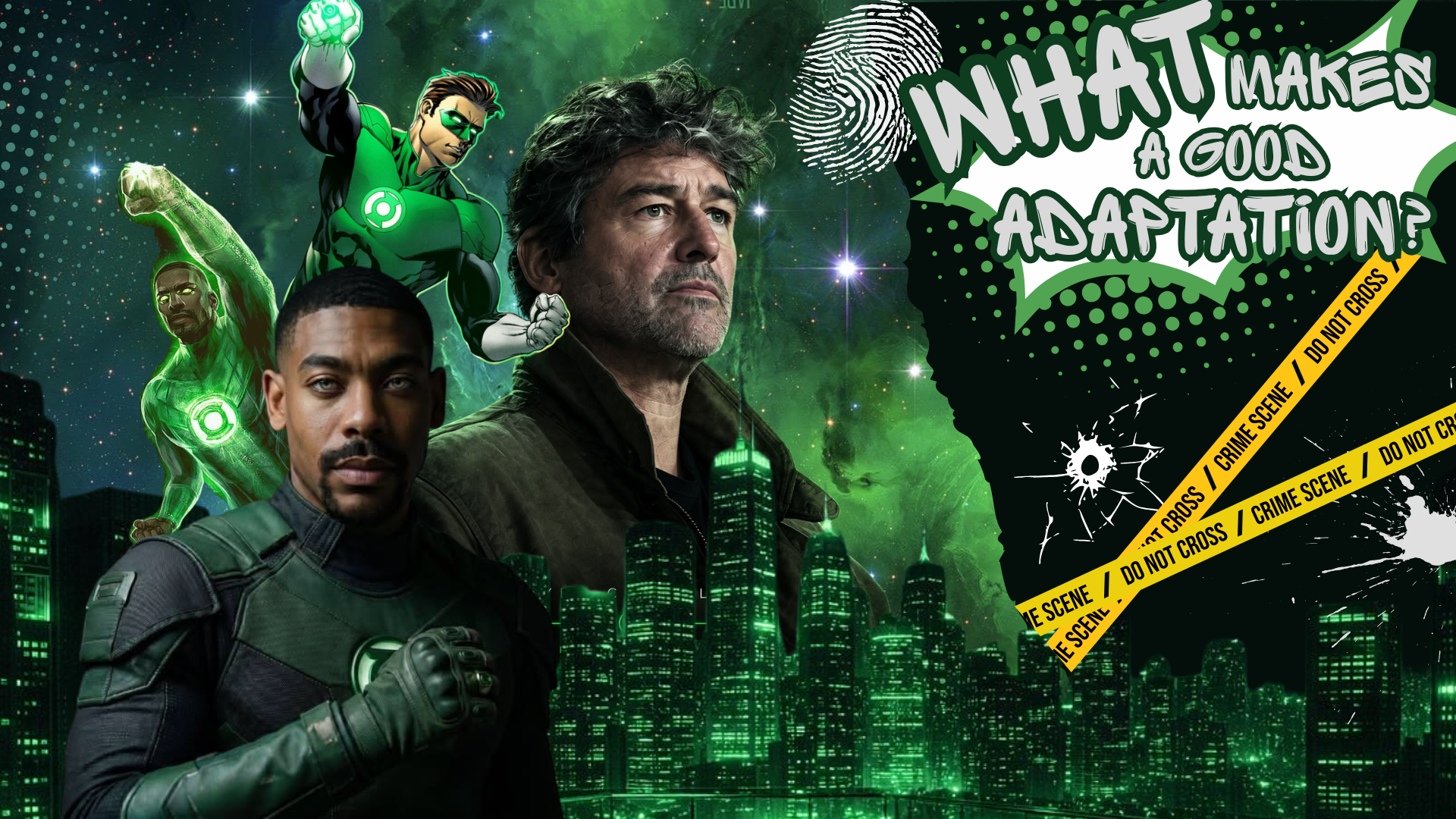
When season one of “Lanterns” ended, online discourse started right away.
Most, including this article, thought it was pretty good for eight episodes of television.
But as a Green Lantern show, the question gets harder to answer.
The show abandoned many of the hallmarks of the Green Lantern mythos we’ve come to know. No massive adventures in space, very few constructs and no rings of any other color. The show was undeniably more interested in John Stewart and Hal Jordan than in the superhero Green Lantern.
Eventually, a common sentiment emerged. “Lanterns” was a good show but a bad adaptation.
But was it?
It’s easy to forget how recently DC integrated the current Lantern mythos. Geoff Johns’s iconic run has shaped the entire foundation of comics, but it didn’t start until 2006. Before then, only Sinestro wielded a different-colored ring.
While spacefaring adventures are certainly routine for Green Lanterns, they’re not a constant. Plenty of their stories see them solving small-scale problems like the ones we see in the show.
The comment about constructs holds the most weight. No matter the iteration, ring constructs have always been integral to Green Lantern, regardless of the mantle holder.
But adaptations do just that: adapt the source material.
Things will change from medium to medium. “Lanterns” isn’t a perfect adaptation, but it’s not a bad one either. It interrogates Jordan and Stewart’s characters better than most comics do.
It’s also important to remember that these stories aren’t over. Sure, the season of television is, but we’re certain to see Aaron Pierre’s John Stewart at least in James Gunn’s upcoming Superman sequel “Man of Tomorrow.” Given the director’s affinity for comic book shenanigans, we can likely expect many more constructs.
Another recent example that drew online criticism was Christopher Nolan’s “The Odyssey.” Adapting one of Western literature’s foundational texts was always going to draw ire.
Unlike “Lanterns,” however, “The Odyssey” hits many of the same beats as the original story but ends differently. Nolan reinterpreted the myth as a story about guilt and regret, a thematic echo of his previous film, “Oppenheimer.”
But for the original’s “fans” who just wanted three hours of hype moments and aura, it was disappointing.
This kind of dogmatism around adaptations of existing stories limits our ability to understand them. As the world changes, so does the context in which we tell stories. Our interpretations of them should reflect that.
The best adaptations improve things. “Lanterns” changed a lot of things from Green Lantern comics – some for better, some for worse. “The Odyssey” managed to make a story that’s been around for two millennia feel fresh, sacrificing some of the myth’s grandiosity in the process.
Neither example is a perfect adaptation. Still, the reason they’re imperfect isn’t that they changed things, but because they could’ve executed those changes better.
We will certainly see more adaptations of both in the future, but if we keep expecting strict adherence to the original texts, we’ll keep being disappointed.
The only permanent thing in art is impermanence. The sooner we recognize that, the more we’ll enjoy the surprises.