
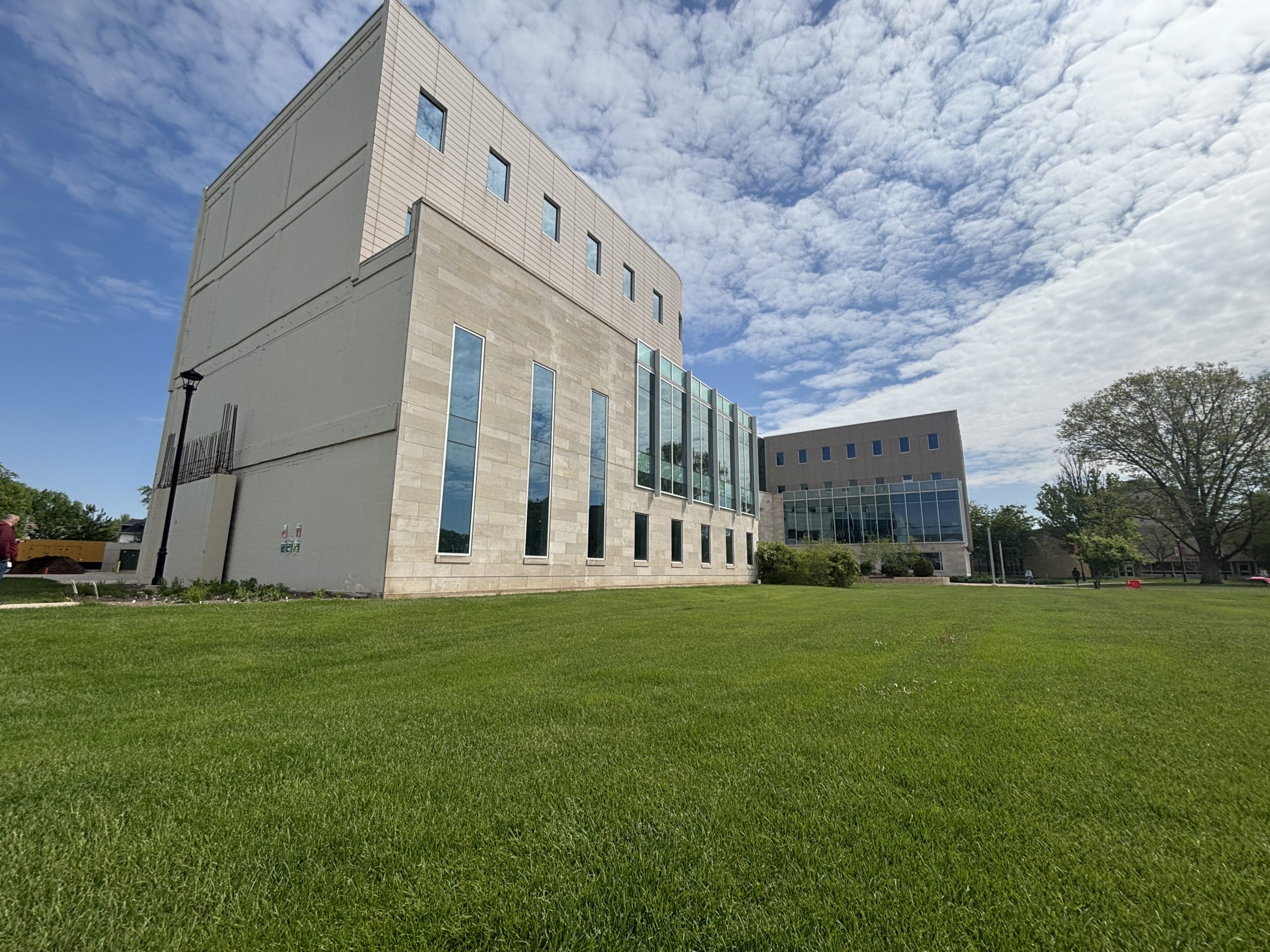
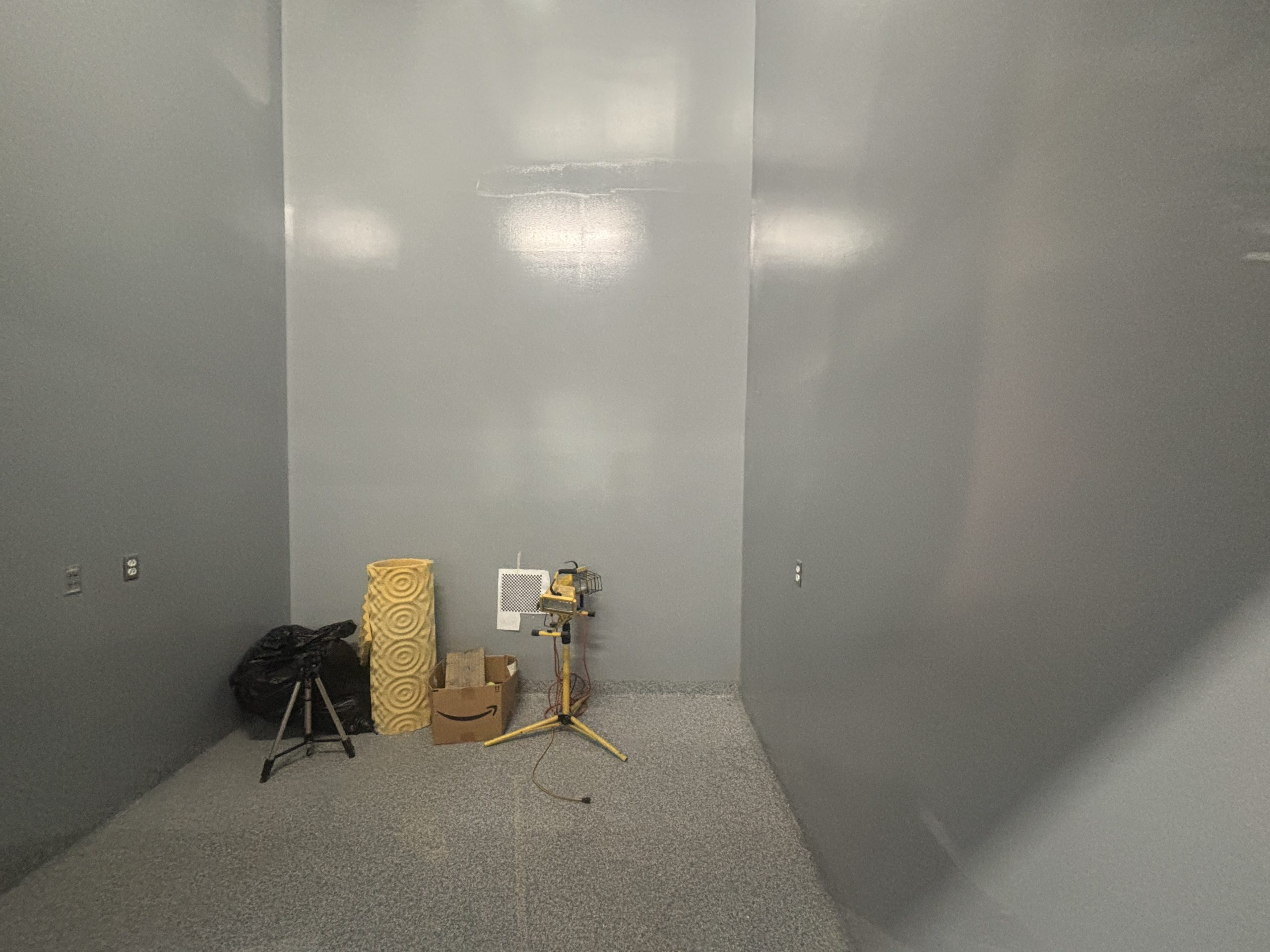
The Zaleski Drop Tower currently sits next to the elevators on the first floor of the Business and Engineering Convergence Center (BECC) – unused.
Thankfully, students can expect this to change.
Recently, Bradley received $1 million in federal funding to make the drop tower functional. The funding, championed by U.S. Senator Dick Durbin, will be used to install advanced equipment and instrumentation.
“The reason for doing something like this is to put Bradley on the map in a way it has never been,” Krishnanand Maillacheruvu, interim dean of the Caterpillar College of Engineering and Technology, said. “I think that it brings very high-quality researchers to Bradley and raises the profile of Bradley tremendously.”
The Zaleski Drop Tower is one of only four in the nation, with two others at NASA and one at Portland State University. These facilities have the power to enable microgravity experiments.
No gravity, but tons of features
With one million dollars in federal funding, the drop tower can now add a drag shield, a braking system, an electrical control panel and a safety feature system to make it fully operational.
The drag shield is a box that will contain materials for students and researchers to conduct experiments. A braking system will ensure no objects fall or break on the bottom floor.
The control panel and safety system will ensure experiments can be conducted safely.
“We are thinking about an electromagnetic stopping system, that’s the braking system,” Yoon-Si Lee, professor of civil engineering and construction, said. “You have to have a lifting mechanism, you have to have a loose mechanism. You bring [an object] up, you let it go and you don’t want it to hit the ground and break.”
Money doesn’t fall from towers
The federal funding was secured mostly due to Maillacheruvu’s work.
The interim dean involved Lee in discussions about the features other drop towers have and what’s still needed. He then pitched the idea to Program Director for Nonprofit Leadership Brad McMillan, who got former Secretary of Transportation and Peoria native Ray LaHood involved.
Maillacheruvu, McMillan and LaHood then met in Washington, D.C. to pitch the idea to Senator Durbin.
“They told me that I had three minutes to do this – three minutes to make the pitch,” Maillacheruvu said. “About two and a half [minutes] into the pitch, Senator Durbin looked up and asked his aides, ‘How do we make this happen?’”
The additions to the drop tower are still being planned, with the completion of the tower expected within a year and a half. The first year will be spent putting all of the additions together, while the following six months will be spent conducting tests on the drop tower.
The tests will ensure that the tower is structurally sound, meets all the safety requirements and, most importantly, will not cause issues to the elevators nearby.
“We [also] have to investigate the capacity our floor has. What kind of force can the floor support? What about the ceiling?” Lee said. “We have to install something to the wall or the ceiling, so it’s likely we’re going to hire a contractor who does all the analysis and engineering design.”
Housed in the BECC, made for all
Despite being pitched by the Department of Engineering, the drop tower will be accessible to students across all STEM fields. This means that experiments conducted in the drop tower will not be limited to engineering students; other departments, such as biology, will be able to use the space as well.
“One of my colleagues wants to do a combustion experiment, [which is] burning a small fuel in a microbial condition,” Sangjin Ryu, professor of mechanical engineering, said. “Drop tower micrography experiments are also very common and promising for biomedical engineering research as well, so we can draw a lot of people from all different types of STEM fields.”
The drop tower is intended not only to provide new opportunities and experiences for current students. As one of only four in the nation and the only one in Illinois, the drop tower could serve as an attraction for students considering pursuing engineering at Bradley.
“We are going to actively engage young students – undergraduate students – to manage and operate this drop tower,” Ryu said. “I’m still learning about those opportunities, but I’m sure all those opportunities, based on the drop tower, will be able to attract students to Bradley.”