
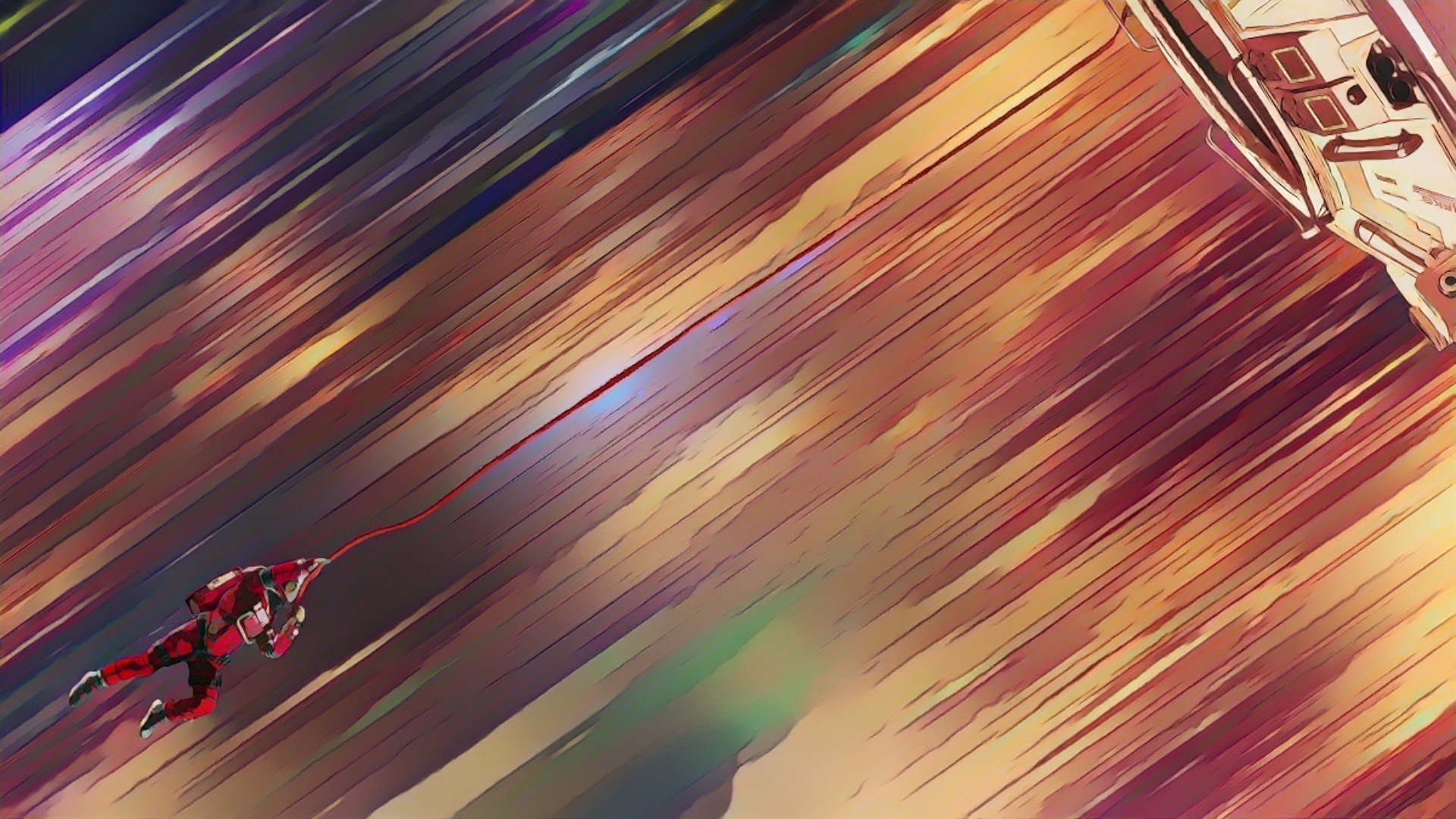
When the initial reviews for the latest blockbuster science fiction film, “Project Hail Mary,” came in, they were more than glowing. Comparisons to other spacefaring masterpieces like Stanley Kubrick’s “2001: A Space Odyssey” and Christopher Nolan’s “Interstellar” were common.
With that kind of hype, the movie living up to the excitement was a long shot.
Fortunately, “Project Hail Mary” sticks the landing.
And then some.
The film follows Ryland Grace (Ryan Gosling) as he wakes up on a spaceship millions of miles from Earth, with no memory of how he got there or what he is supposed to do. He slowly pieces together his job and regains his memory, realizing he is the sole survivor of a mission to save the sun.
With a premise this engaging, it would take a massive fumble on behalf of the studio for this not to be a major hit, especially during the time of year that is often lacking in good movies.
In retrospect, the creative team behind the movie should’ve always been a good sign.
The film is an adaptation of Andy Weir’s novel of the same name. Weir’s last feature film adaptation was 2015’s “The Martian,” which received seven Oscar nominations. The screenplay was then penned by Drew Goddard, who also wrote “The Martian,” with assistance from Weir.
“Project Hail Mary” does an admirable job distilling down a several-hundred-page novel into a tight two-and-a-half hours, with no moment feeling rushed. If anything, the film moves too slowly at points, showing just how capable an editor Goddard can be as an adaptation writer.
Phil Lord and Christopher Miller returned to the director’s chairs for the first time since 2014, and with story credits on the two Spider-Verse films in the intervening years, their inclusion was always going to be a good sign. Their direction is dynamic, exciting and, most importantly, never confusing. For a movie that predominantly exists in a space without gravity, it never loses its sense of direction.
Lord and Miller also brought along a spectacular cast to help bring these characters to life.
Ryan Gosling is transcendent, carrying the movie’s runtime with dexterity and charisma. Sandra Hüller counterbalances him perfectly as a rigid, pragmatic government official during the flashbacks. James Ortiz provides the voice of Ryland’s alien companion, Rocky. The balance he strikes between robotic text-to-speech and gut-wrenching emotion is brilliant to witness.
Daniel Pemberton’s score is a soaring work of art that adds to the grandiosity of every minute. It sweeps through moments where you should be in awe, it intensifies the most nail-biting scenes and it punches you in the face when the script has you on the verge of tears.
The movie is firing on all cylinders, but no one is doing better work than cinematographer Greig Fraser.
With credits on the first two “Dune” movies, along with 2022’s “The Batman,” Fraser is no stranger to spectacle. But “Project Hail Mary” may be his best work yet.
This may be blasphemous to say, given that “Interstellar” exists, but I’ve seen no film that captures the true enormity of space better than Fraser does in this movie. The empty void is perfectly lit by the surrounding stars. The spaceships feel lived in and exciting, while the scenes on Earth are deliberately dreary and dull.
There’s a moment near the middle of the film that inspired more awe in me than any film I’ve seen in theaters since I first watched “Sinners” a year ago. I won’t spoil it here, but you’ll know it when you see it. It is one of the most visually stunning pieces of filmmaking I’ve ever seen.
Despite everything going for it, “Project Hail Mary” is a bit frustrating because for about two hours, it’s genuinely perfect. However, the last half hour feels a little rushed. The performances, visuals and score are still stellar, but after what feels like a sense of finality, it’s undercut by an attempt to rehash the emotions we just went through, making the moment feel unearned.
The film’s ultimate conclusion is satisfying enough, but it feels like there are anywhere between three and five other moments where the movie could have or should have ended.
Despite an imperfect re-entry, “Project Hail Mary” delivers on its promise in almost every way. Lord and Miller are already attached to direct another Andy Weir adaptation, this time based on his 2013 novel “Artemis.”
The collaboration between the two is clearly a good one, but if they want to surpass the greatness of “Project Hail Mary,” it might take another miracle.