
It usually starts as background noise.
An episode plays while homework gets done, then another – and another. Before long, it’s 2 a.m., and what began as casual watching has turned into something more.
Not just interest – but attachment.
For many college students, fictional characters aren’t just part of entertainment anymore; they resemble something closer to real companions.
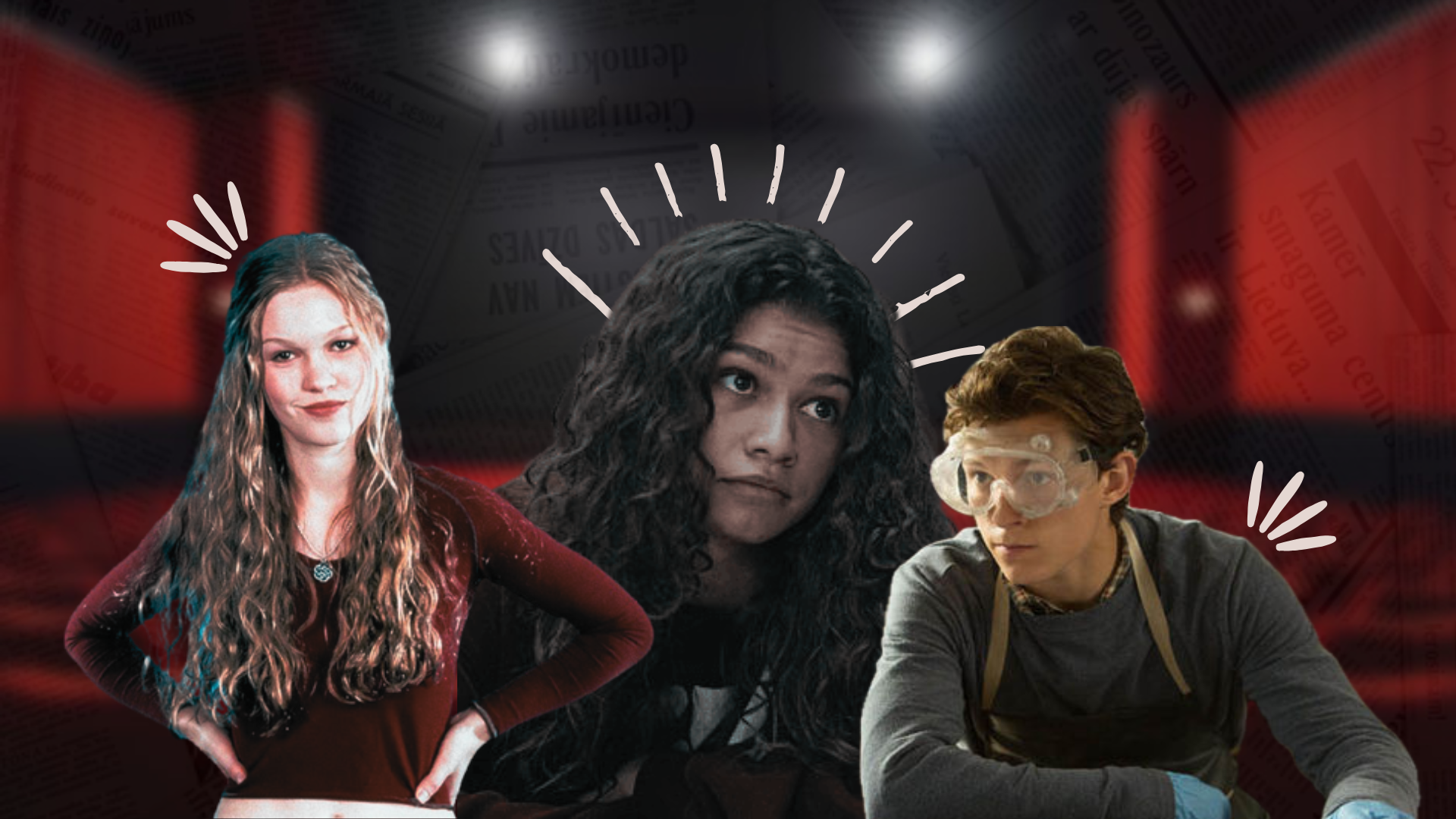
Take Rue Bennett from “Euphoria.” Her narrative is complex, dramatic and sometimes hard to digest, but that’s precisely what makes it compelling. The realism of her struggles is relatable in a sense, even if the context is exaggerated.
The audience doesn’t only watch her journey; they sympathize with her, hope for her success and empathize with her wild and irresponsible behavior.
Then there’s the iconic Peter Parker from the Marvel universe.
While he’s known for his superhero persona, what keeps people invested is what’s beneath the mask. He’s balancing responsibility, relationships and the pressure to figure things out – something that feels especially relevant for college students trying to navigate uncertain futures.
Characters like Jim Halpert from “The Office” embody something else entirely: longing. While shows like “The Office” are often watched for their predictability and humor, Jim’s emotional balancing act with Pam resonates on a deeper level. His arc reflects a kind of longing that many viewers recognize in themselves, and that sense of identification is what keeps audiences engaged for so long.
This kind of connection isn’t accidental.
College is a period defined by change: new environments, ever-evolving friendships, academic stress and the pressure of figuring out what comes next. In contrast, fictional characters offer consistency.
Their stories might shift and change, but viewers know it’s part of a bigger plot; everything will work out in the end. And those characters can always be found by turning on the TV. They have all the depth of a real person without the risk of miscommunication or fear of rejection.
The use of social media has increased these attachments. For instance, TikTok ensures that the characters are always circulating through clips and snippets. You can build a strong connection to characters without even being engaged in watching the series.
However, this raises an uncomfortable question: at what point does the connection become dependence?
Sure, it’s easy to say that these attachments are harmless – and in many ways, they are. Fictional characters can provide comfort and inspiration, but they can also become a substitution for real-world interaction.
It’s easier to replay the scene where Kat Stratford recites her poem from “10 Things I Hate About You” – a vulnerable scene where tension meets unspoken feelings – than it is to confront your own romantic situations. It feels emotionally safer to watch the fictional version than to go through one’s own relationships, which might lead to an uncomfortable outcome.
It doesn’t mean the connection created by the viewer isn’t real. It is, and its emotional impact cannot be denied. In today’s society where young people find themselves confused and pressured, such stability can prove itself invaluable.
Fictional characters may not exist outside their stories, but the role they play in people’s lives does.
In college, where everything can feel temporary or unclear, they offer something rare: a connection that always feels the same, every time you come back to it.