
Before 2019’s “Knives Out,” writer/director Rian Johnson had a somewhat controversial career.
Between the sci-fi action movie “Looper” and the divisive “Star Wars: The Last Jedi,” his turn to the whodunnit genre was somewhat surprising.
But my goodness has it been worthwhile.
The tight writing and spectacular cast made “Knives Out” one of the best movies of the 21st century. While its follow-up, “Glass Onion,” wasn’t as universally praised, it was still a worthwhile successor.
Now, “Wake Up Dead Man” caps off a spectacular trilogy in dramatic fashion.
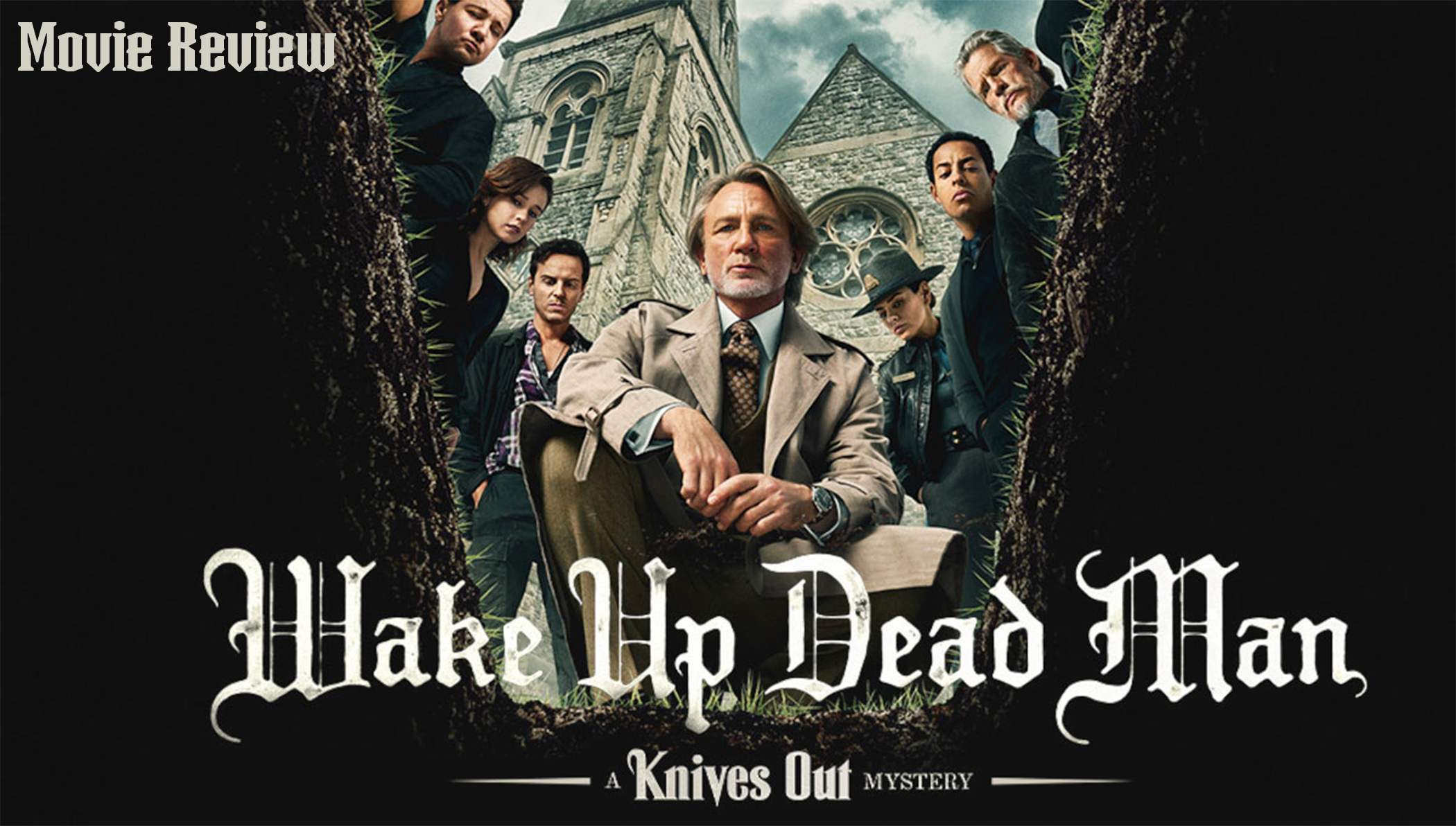
Like the other films in the franchise, “Wake Up Dead Man” follows detective Benoit Blanc (Daniel Craig) as he investigates a murder mystery. This time, Blanc’s partner-in-solving-crime is Jud Duplenticy (Josh O’Connor), a Catholic priest sent to assist a remote and radical church after attacking an ignorant colleague.
As can be expected, the mystery is clearly established, well-paced and constantly intriguing. The ensemble cast, filled out by Glenn Close, Mila Kunis, Kerry Washington, Jeremy Renner, Andrew Scott and plenty more, is fantastic.
The biggest area in which “Wake Up Dead Man” separates itself is its social commentary.
The franchise is no stranger to covering contemporary issues. “Knives Out” touched on the exploitation of immigrants while “Glass Onion” critiqued the influence of billionaires. But the newest entry in the franchise handles its topic with more nuance than any that came before it.
The murder victim in “Wake Up Dead Man” is Monsignor Jefferson Wicks (Josh Brolin), a charismatic pastor leading and radicalizing a tight-knit group of followers. His rhetoric alienates those outside of his inner circle, including Duplenticy, who emerges as the prime suspect in Wicks’ murder.
The best parts of the movie are the interactions between Blanc and Duplenticy. Blanc, an atheist, has clear disdain for Christianity and the influence of people like Wicks. On the other hand, Duplenticy’s unwavering faith drives his every action, and his displays of empathy and compassion for those around him earn Blanc’s respect.
“Wake Up Dead Man” provides a snapshot of modern Christianity — especially in America, where more compassionate voices are drowned out by louder, angrier ones. Religion has become a tool or excuse for discrimination, hate and violence.
But there are plenty of moments of hope for a different kind of Christianity. Near the end of the second act, Duplenticy makes a phone call that results in the trilogy’s most potent emotional beat. I won’t spoil the moment, but it has not left my head since I saw the film.
The filmmaking on display is just as top-notch. The lighting stands out as an extension of the film’s themes. The movie is shot dynamically and framed interestingly in every scene. There’s a tension and intimacy to the most dramatic scenes, enhanced in every way by the way the film is shot. Johnson’s command of space has never been better, and the symbolism strikes a perfect balance between subtlety and grandeur.
An area in which the film falls slightly behind its predecessors is in the development of side characters. The performers are still operating at a high level, but they aren’t as involved in the story as in the previous two entries. Where each suspect in “Knives Out” and “Glass Onion” felt unique and distinct, they somewhat blend here.
“Wake Up Dead Man” is the final film in Johnson’s contract with Netflix, but both he and Craig have expressed interest in a fourth film in the franchise. And if they continue to be as good as the first three, I will have no complaints.
“Wake Up Dead Man” will be released on Netflix on Dec. 12, but it will be best experienced in a theater. Hopefully, future films get more extended and widespread theatrical releases. But if this is the final movie for Benoit Blanc, the “Knives Out” trilogy will go down as one of the best in cinema’s history, with a more than worthy final entry.